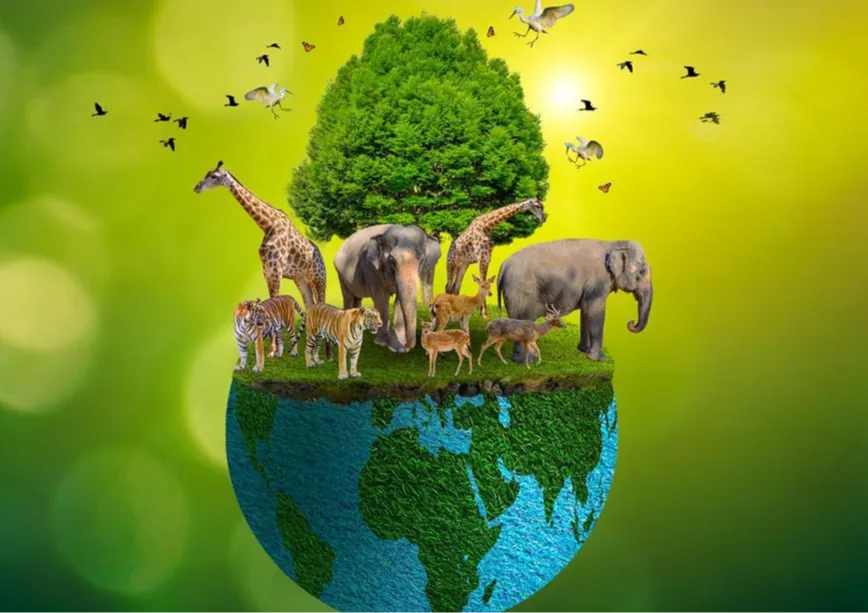
Earth’s Wildlife Is Vanishing: Why Saving It Is the Only Way to Save Ourselves
A Planet in Crisis And We Are Next
Earth’s wildlife is disappearing at a rate never seen in human history. Forests are shrinking. Oceans are choking with plastic. Iconic species like tigers, elephants, orangutans, and sea turtles are fighting a losing battle for survival. Scientists warn that we are living through the Sixth Mass Extinction, but this time, the cause is not an asteroid it is us.
This crisis is not just about animals.
It is about our own survival.
Wildlife helps create the air we breathe, the water we drink, the soil that grows our food, and the climate that keeps our planet livable. When wildlife dies, ecosystems collapse and when ecosystems collapse, humans are not far behind.
This article explains why saving wildlife is not charity, but self-preservation, and why protecting every species is essential for our future.
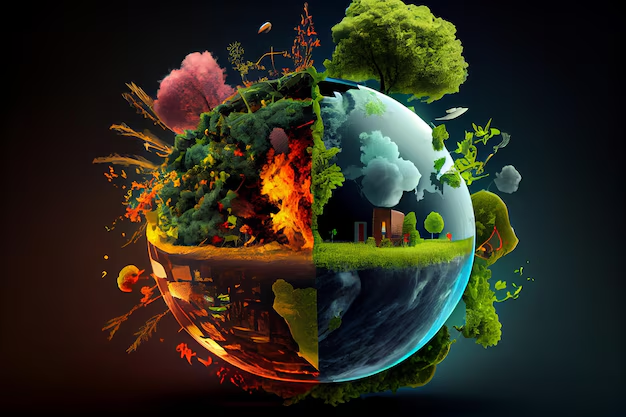
1. Wildlife Is Disappearing And The Speed Is Terrifying
The numbers are shocking. According to global conservation reports, Earth has lost 68% of its wildlife populations in just the last 50 years.
Let that sink in: more than half of all wild animals are gone in one human lifetime.
Why is this happening?
- Deforestation for farming, mining, and urbanization
- Climate change causing extreme temperatures, droughts, and habitat loss
- Pollution, especially plastic and chemical waste
- Overfishing and destruction of marine ecosystems
- Poaching and illegal wildlife trade
- Human-wildlife conflict as animals lose their homes
Entire ecosystems rainforests, wetlands, coral reefs, grasslands are shrinking or disappearing. Many species alive today may not see the next century.
We are not simply “losing animals.”
We are losing balance, stability, and life-support systems we rely on.
2. Why Wildlife Matters More Than We Realize
People often ask, “Why should we care about animals?”
The truth is: wildlife is not something separate from us. It is a foundation of human survival.
Ecosystems are like a machine remove one part, and everything shakes. Remove too many, and the system collapses.
Here’s how wildlife directly protects humanity:
2.1 Wildlife Keeps Our Air Breathable
Forests, oceans, and wetlands absorb carbon dioxide and produce oxygen.
Here’s the surprising part:
Animals play a vital role in keeping these ecosystems healthy.
- Elephants spread seeds that grow forests.
- Whales fertilize oceans to stimulate phytoplankton which produces 50% of Earth’s oxygen.
- Wolves control herbivore populations so forests can regenerate.
Without animals, nature simply cannot do its job.
2.2 Wildlife Keeps Our Food Growing
Bees, butterflies, bats, and birds pollinate 75% of all crops humans eat.
Without them, grocery stores would look empty and food prices would triple.
Predators like owls and snakes control rodents that destroy crops.
Marine species fertilize coastal ecosystems that supply billions of people with fish.
Wildlife is the planet’s natural agriculture system.
2.3 Wildlife Prevents Disease Outbreaks
Healthy ecosystems act as natural disease barriers.
When wildlife disappears, humans come into closer contact with animals that carry dangerous diseases, increasing the risk of pandemics.
Scientists estimate that 60% of new infectious diseases come from stressed ecosystems where wildlife has been pushed out.
Protecting wildlife reduces the risk of the next deadly outbreak.
2.4 Wildlife Protects Our Water
Wetlands, mangroves, and forests filter water, prevent floods, and maintain rainfall cycles.
Animals like beavers, frogs, fish, and insects keep rivers and lakes healthy.
If these species vanish, water becomes polluted, scarce, or unpredictable.
3. Without Wildlife, Ecosystems Collapse And Humans Follow
Imagine the world without bees.
Without forests.
Without fish.
Without clean water.
This is not science fiction. This is the direction we are moving.
When animals disappear…
- Crops fail
- Weather becomes extreme
- Diseases spread faster
- Oceans become dead zones
- Economic collapse begins
- Food security disappears
We are tied to nature with invisible threads.
Cut enough of them, and our survival becomes impossible.
4. Human Actions Are Destroying Wildlife But Humans Can Also Save It
The good news?
We caused this crisis, so we can also solve it.
All over the world, inspiring efforts are already proving that wildlife can bounce back if given the chance.
4.1 Reforestation Is Bringing Forests Back to Life
Countries like India, China, Brazil, and Kenya are restoring millions of acres of forest.
When forests return:
- Tigers come back
- Birds return
- Rainfall patterns stabilize
- Oxygen levels increase
- Climate becomes more predictable
Trees and animals rebuild each other.
4.2 Marine Reserves Are Reviving Ocean Life
Protected oceans show a 600% increase in fish populations.
Sea turtles, sharks, and corals return when fishing pressure reduces.
Countries like Australia, the Philippines, Seychelles, and Ecuador are leading the way with large marine sanctuaries.
4.3 Successful Species Recoveries Show Hope
Some animals were on the edge of extinction but were saved through powerful conservation efforts:
- Giant pandas
- Arabian oryx
- Humpback whales
- Bald eagles
- California condors
With support, species recover and ecosystems recover with them.
4.4 Indigenous People Are Leading the Future of Conservation
Indigenous communities protect 80% of Earth’s remaining biodiversity.
Their traditional knowledge, forest management, and sustainable lifestyles show how humans and wildlife can coexist peacefully.
5. What Happens If We Do Nothing?
If the world continues on its current path, scientists warn that we may lose:
- Half of all species by 2100
- 70% of coral reefs
- Most insect pollinators
- Large mammals like elephants and big cats
- Major fish populations
This would lead to:
- Food shortages
- Water crises
- More pandemics
- Economic collapse
- Climate disaster
- Mass migration
- Global social instability
The suffering will not be limited to animals.
It will fall hardest on humans.
6. What YOU Can Do to Save Wildlife (Even If You’re Just One Person)
Protecting wildlife is not only for scientists and activists.
Every person has power and every action counts.
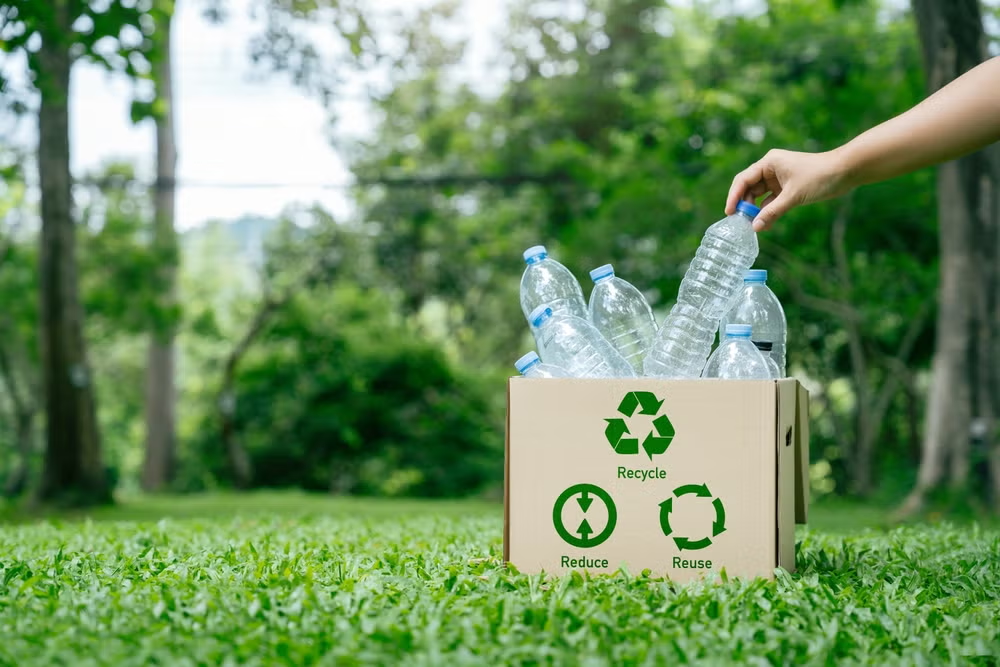
6.1 Reduce Plastic It Saves Marine Life Instantly
Switching to reusable bags, bottles, and containers keeps plastic out of oceans where it kills turtles, dolphins, and seabirds.
6.2 Support Sustainable Brands
Choose companies that protect forests, reduce water usage, and avoid animal cruelty.
Your purchasing power is a vote for a healthier planet.
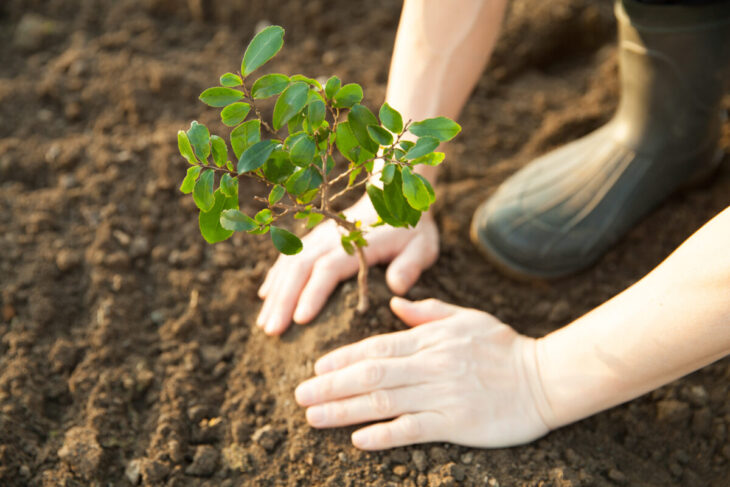
6.3 Plant a Tree or Start a Mini Garden
A single tree supports hundreds of insects, birds, and microorganisms.
Even a small balcony garden can provide food and shelter for urban wildlife.
6.4 Reduce Meat Consumption
You don’t have to go vegan.
Just eating meat 2-3 times less per week reduces:
- Deforestation
- Water waste
- Greenhouse gases
- Wildlife habitat loss
6.5 Protect Local Wildlife
Feed birds, make water bowls for animals during summers, rescue injured wildlife, and support animal shelters.
6.6 Advocate for Change
Share posts. Speak up. Vote for leaders who care about sustainability.
Public pressure forces governments and corporations to act.
7. The Final Message: Saving Wildlife Is Saving Ourselves
Humanity is standing at a crossroads.
One path continues destruction leading to a future where nature collapses and human life becomes harder, more expensive, and more dangerous.
The other path restores forests, oceans, rivers, and wildlife bringing stability, balance, and hope.
Saving wildlife is not optional.
It is not a “nice thing to do.”
It is a survival strategy.
Every species matters.
Every action matters.
Every human matters in this fight.
The future of wildlife is also the future of humanity and both are in our hands.